Introduction: the day a familiar logo disappeared from Mbappé's boots
On 18 September 2026, Kylian Mbappé was announced as a partner of On, the Swiss sportswear brand. His relationship with Nike, which lasted around twenty years, was reported to have ended when his contract expired in July. On is best known for running shoes, and Mbappé is the first footballer it has signed. Its first football boots are expected in 2027.
Three years earlier, in August 2023, England captain Harry Kane signed a long-term deal with the American brand Skechers, which is known for comfortable everyday shoes. Kane became the face of the first football boot Skechers launched in Europe. Both announcements struck many fans as unexpected.
Why would players like Mbappé and Kane team up with brands that are still new to football? And how do these pairings look to the fans watching from the stands or at home? This article looks at the question through facts that can be checked in news reports and through research on celebrity endorsement.
1. The era of the big two: Ronaldo's Nike, Messi's Adidas
Mention football boots and most people think of Nike and Adidas. Two superstars did much to shape that picture. Cristiano Ronaldo has worked with Nike since 2003, and in November 2016, in a video released by Nike, he said "this is my brand", signalling a partnership "for life". The terms were not disclosed.
Lionel Messi's relationship with Adidas has been just as long and deep. In February 2017 he was reported to have signed a "lifetime" deal with the brand. Ronaldo's Nike and Messi's Adidas: for the long years in which the two players competed on the pitch, the two brands were spoken of in the same breath as their names.
Is the big-two pattern still in place? The numbers say yes. According to a report that counted the boots worn by players at the 2026 World Cup, more than eight in ten players wore Nike or Adidas. Puma accounted for about one in ten, and Skechers for less than 2%. In terms of market share, the era of the big two is not over. What this article focuses on is not share but the fact that the line-up of players stepping outside the big two has begun to change.
2. Players who stepped outside the big two
The first big example was Neymar. In September 2020 he ended a relationship with Nike that had lasted around fifteen years, since he was 13, and signed with Puma. In his announcement he referred to Puma's history with Pelé and Maradona, with the message "the king is back". Reports gave several explanations for why the Nike relationship ended; as they cannot be verified, we do not go into them here.
Next came Kane. For Skechers, the deal was a foothold in a sport that was new to the company — a brand building an entire football category around a single player. Skechers has since released special boots to mark Kane's records, including an edition celebrating his becoming England's top scorer at World Cups in 2026.
And then, in 2026, Mbappé. According to reports, the deal combines cash with equity, making Mbappé a shareholder in On. As well as being the face of the brand, he is said to be central to developing and testing its boots. On has not yet sold a single football boot. Reports point to two things behind the deal: Thierry Henry, the former France forward, who had worked behind the scenes since 2025 and was officially introduced as On's director of football on the day of the announcement; and a plan to build the boots from scratch together with Mbappé.
Neymar, Kane, Mbappé: that is still only three players. It may be too few to call a trend. Even so, every few years a player known all over the world steps outside the big two, and the latest has become one of the brand's owners. Even if it does not yet show up in the market-share figures, it is a striking change.
3. What research says about the "match"
Advertising in which celebrities recommend brands has long been studied in marketing. One well-known idea is the "match-up hypothesis": the better the fit between a celebrity and a brand, the more effective the advertising. It became widely known around 1990. Another is "meaning transfer": the image a celebrity carries — strength, sincerity, novelty — passes on to the brand they work with.
What do we learn when the research is gathered together? A study published in 2017 combined the results of 46 studies involving more than 10,000 people, carried out up to April 2016 (an approach known as a "meta-analysis", which pools many studies to see the overall pattern). The result was surprising: simply averaged across all studies, the effect of using a celebrity was close to zero.
The authors' point, however, was not that the average was zero but that the effect varies greatly depending on the conditions. Fit stood out most clearly: the better the match between celebrity and brand, the stronger people's liking for the brand and their wish to buy it — a finding that held up when the studies were pooled. The strength of this link was what researchers call "moderate". In other words, the match-up hypothesis was supported across many studies.
4. The less familiar the brand, the more a player matters
The same meta-analysis contains a result that matters even more for this article: celebrities had a larger effect for less familiar brands and products than for well-known ones. The authors suggest that people's views of well-known brands are already settled, so a celebrity's endorsement changes them less.
Apply this to football boots and the picture shifts. For Nike, Ronaldo — and for Adidas, Messi — made already strong brands even stronger. For Skechers and On, still unfamiliar in football, Kane and Mbappé are how people get to know them as football brands in the first place. If the research holds, the brand that gains most from a famous player may well be the new one.
A caution is needed here. Most of the studies in the meta-analysis were experiments that showed people an advertisement, often in print, once and measured their reaction on the spot. They did not study long, real-world relationships such as multi-year contracts or boots worn match after match, and none of them looked at football boots. What we describe here is an implication drawn from research, not a fact established for football boots.
5. How do "unexpected" pairings look to fans?
By the match-up hypothesis, a poor fit is a disadvantage. So are Kane and Skechers, or Mbappé and On, poor fits? The key point is that what counts as a good fit depends on who is looking. A maker of everyday shoes and a striker may seem an odd pair at first. Yet Kane's steady accumulation of goals, year after year, and the quiet persistence of a brand that has made shoes for daily life may look like a match to some.
The same goes for Mbappé and On. On grew up in running, and Mbappé is one of the fastest players on the pitch. Seen through the single lens of running, it could hardly be a better match. Whether fans find the pairing "unexpected" or "of course" depends on where they look.
The meta-analysis has another interesting finding: a subtle, implicit endorsement works better than an explicit "buy this". For a footballer, the most natural endorsement is simply to keep wearing the boots in matches. A new logo caught in the close-up after a goal, again and again, may slowly change how fans see the brand.
6. Players have brands too
So far we have looked from the brand's side, but players have brands of their own. One study developed a way to measure how closely the image a player wants to project matches the image people actually receive, testing it with responses from about 800 people about five top athletes. A player's image, in other words, is not set by the player alone but is negotiated with the audience.
From this angle, choosing a new brand is also a way for a player to express how they want to be seen. But what Neymar, Kane and Mbappé were thinking when they made their choices is unknown beyond what they have said in public. Neymar spoke of "the king" returning, placing himself in the line of Pelé and Maradona.
How does a choice of brand change how a player is seen? And how do the player's image and the brand's image affect each other? Players and brands may be less a case of one lifting the other than of each shaping the other's image. For Mbappé, now also a shareholder, that relationship runs deeper still.
7. What we know, and what we don't
To sum up what we know: first, as of 2026, Nike and Adidas still dominate the boot market. Second, even so, world-class players have chosen brands outside the big two every few years. Third, pooled research shows that the effect of celebrities varies greatly with fit, and is larger for less familiar brands.
There is also much we do not know. To begin with, the examples are few. This article has looked at three players, and that is not enough to say that top players now choose new brands. Most studies, too, measured reactions to a single exposure to an advertisement, not relationships between players and brands over many years. Above all, the author could find no study that measured, before and after, how fans' feelings towards a player, and their views of the old and new brands, change when a player switches brands.
The answer would help brands judge the value of multi-year contracts, and help clubs and leagues understand how fans receive the pairing of players and sponsors. For fans, too, it could be a prompt to think about why they like the players and brands they do.
8. What can a share price tell us about this deal?
Mbappé is a shareholder in On. That means On's share price matters not only to the brand but to Mbappé himself. This is where the deal differs from a sponsorship in which a brand simply pays a player to wear its boots.
So how has the share price moved so far? On the day of the announcement, roughly twice the usual number of On shares changed hands, but the closing price barely moved. The big move came four days later, when the company set out its plans, including for football, to investors: the shares rose by more than 7% in a day. At the close on 12 October, the price stood almost 30% higher than before the announcement. Other news came out in the same period, however, and analysts were divided. The share price alone cannot tell us how much of this is down to the deal.
Research has a way of studying share prices on announcement days. A study published in 1995 looked at 110 announcements of celebrity deals and found that, on average, share prices rose slightly on the day. But what a share price reflects is expectation — the market's view that a deal is likely to lead to future sales. Whether sales actually rise is a separate question.
If so, what is really worth watching lies ahead. As clues to the deal's effect, at least three moments stand out. The first is when the first boots go on sale, when expectation turns into a product people actually buy. The second is when advertising featuring Mbappé begins, when the sense of "fit" that research talks about is tested widely for the first time. The third is when another big-name player follows Mbappé to On, which would show whether this is a single deal or a change in the shape of the brand. Each time, looking at the share price, sales and fans' reactions side by side should tell us a little more about what this deal means.
There is a precedent for how hard it is to check through sales. After his Nike contract ended in 2019, the tennis player Roger Federer invested in On and became a partner in developing its products. On was not listed at the time, so share prices cannot be compared. In sales terms, On grew from about CHF 267 million in 2019 to more than CHF 3 billion in 2025. But running was booming and On's retail reach was widening over the same period, so the effect of the Federer relationship alone cannot be separated out.
9. The author's view: what is happening to sports brands
What follows is the author's opinion. Judging by the numbers, it is too early to say that the era of the big two is over. Yet the fact that some players are stepping outside it suggests that the relationship between brands and players is starting to change. Strong brands once chose strong players. Now players also choose brands, and sometimes, by taking equity, become part of them.
As research suggests, famous players matter most to new brands, and for players, a pairing with a new brand is a chance to express how they want to be seen. In future, we may see more new brands leap to the front of the industry through a deal with a player. When a player holds shares, the brand's success becomes the player's own success too. Even so, a player's pull only works if the people who wear the product find it good. The sports brands of the future may be built in relationships with players that rest on continuing to make good products.
In the end, though, that meaning is decided by the fans watching in the stands and at home. However large the contract, the effects research describes will not appear unless fans feel the pairing fits.
Conclusion: how do fans see the logo on a boot?
Mbappé will not step onto the pitch in On boots until 2027 at the earliest. When he does, how will fans see his feet? As something unexpected, or as something very Mbappé? And how will that reaction change their feelings towards him, and their view of On?
Research tells us that fit and familiarity matter. Share prices tell us what the market expects. But how fans' reactions shift in the specific case of football boots has not yet been examined.
Precisely because pairings of players and brands are multiplying, perhaps it is time to measure properly how fans actually receive them.
Sources
Agrawal, J., & Kamakura, W. A. (1995). The economic worth of celebrity endorsers: An event study analysis. Journal of Marketing, 59(3), 56–62. https://doi.org/10.1177/002224299505900305
Kamins, M. A. (1990). An investigation into the "match-up" hypothesis in celebrity advertising: When beauty may be only skin deep. Journal of Advertising, 19(1), 4–13. https://doi.org/10.1080/00913367.1990.10673175
Knoll, J., & Matthes, J. (2017). The effectiveness of celebrity endorsements: A meta-analysis. Journal of the Academy of Marketing Science, 45(1), 55–75. https://doi.org/10.1007/s11747-016-0503-8
McCracken, G. (1989). Who is the celebrity endorser? Cultural foundations of the endorsement process. Journal of Consumer Research, 16(3), 310–321. https://doi.org/10.1086/209217
Sotiriadou, P., Linsner, A., Hallmann, K., & Hill, B. (2025). Athlete brand congruence as a measure to evaluate brand identity and image fit. Australasian Marketing Journal, 33(1), 47–57. https://doi.org/10.1177/14413582241240077


 Nike parts ways with Kylian Mbappé; soccer superstar signs with OnCNBC
 Skechers Signs Harry Kane to Long-Term Deal in Bold Entry Into SoccerSportico.com
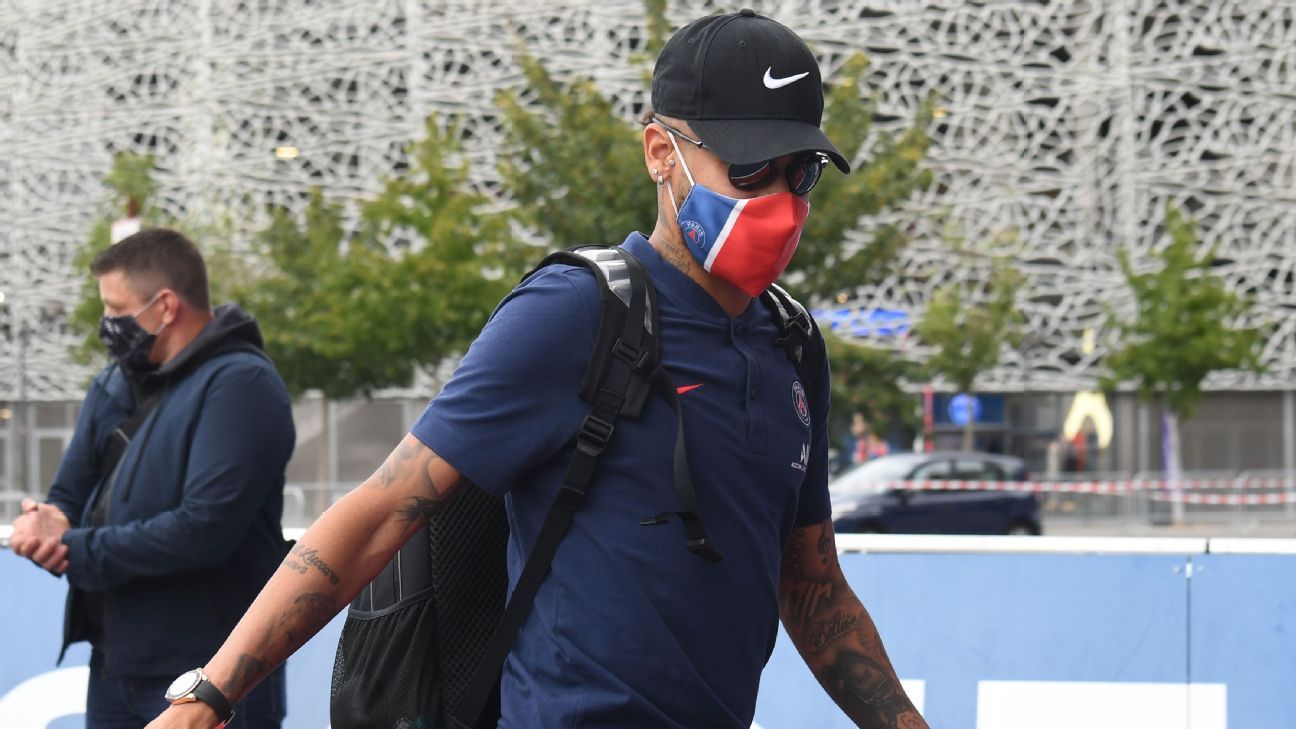 Neymar joins Puma after ending 15-year Nike partnershipESPN.com