On 4 October, 60,907 people filled Tottenham Hotspur Stadium in north London for an NFL game between the Indianapolis Colts and the Washington Commanders. Shortly before, however, slow sales had led to the remaining tickets being cut to £79; upper-tier seats had reportedly started at £185. A week later, the Eagles and the Jaguars drew 61,322 to the same stadium, the largest crowd for an NFL game at Tottenham.
Top leagues and clubs playing abroad is nothing new. In summer 2023 the Premier League held its first Summer Series in the United States, watched by more than 265,000 fans. In 2025 four clubs, including Manchester United and West Ham, played in New Jersey, Chicago and Atlanta. The same summer, Tottenham and Arsenal met at a new stadium in Hong Kong: the first north London derby played outside the UK. Tottenham then went on to Seoul.
These, though, are pre-season games. The NFL is different. It plays regular-season games, which count in the standings, in London every year. A league that fills stadiums at home is cutting prices to fill one here. Why go to such lengths?
Three aims, with new fans at the centre
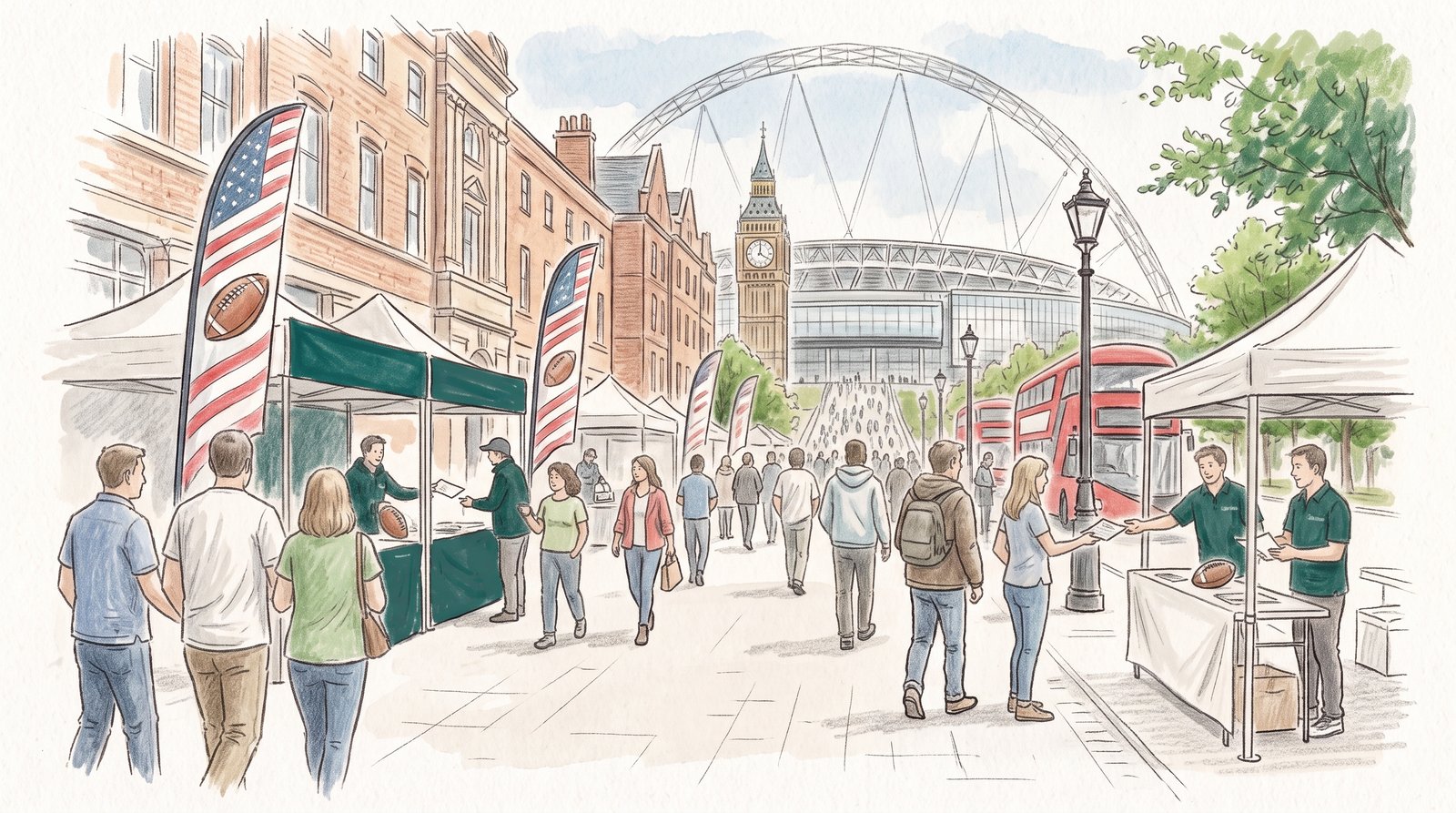
There are three likely aims: finding sponsors in the UK, creating new fans, and the signal of being a global league. Since 2022 the NFL has given six clubs the right to market themselves in the UK, allowing them to sell sponsorship, run fan events and sell merchandise. The league describes this as long-term fan growth. Sponsors and a global name both depend on people watching, so new fans appear to sit at the centre of all three.
The effort reaches beyond the stadium. In 2019 the NFL opened the NFL Academy in north London to develop young players (it moved to Loughborough in 2022), and it runs a national championship for schools in flag football, a non-contact five-a-side version of the game. Children who pick up a ball at school may become the spectators of the future. The few London games each year can be seen as the showcase for this longer work.
Seen this way, the price cut looks different too. The NFL has not explained it, so we cannot say it was part of the plan. But for someone who has never watched the NFL, a £185 seat is a high door to walk through. So how did the fans who have followed the NFL in Britain for years take it?
What British fans say
On the day the price cut was reported, the Associated Press spoke to fans in London. Andy Burrows, a London-born Commanders fan named the NFL's international fan of the year in 2025, had paid £235 for a lower-bowl seat in the summer pre-sale. "They don't care about the fans," he said. "As long as that place sells out and it looks good on TV, the NFL won't care about us." Matt Cullen, a Londoner who supports the Jets, put it more calmly: "I understand the clamor to sell out, but it also shows that it wasn't priced correctly in the first place."
The Jaguars, who play in London every year, hear different voices. Before the game on 11 October, Keir Robinson, who had flown down from Edinburgh, said: "We're totally bought in." Even a visit every second year, he added, "would be big for us." John Rawson, from Dorset, said it "would be a shame" if the club changed course. Before the season the Jaguars said they would reevaluate their London strategy, and the club's president has called its commitment to London "year to year". In the same report, Cullen offered another view: "Fans are a little bit bored of the Jags now."
This is the difficulty of playing abroad. Coming back every year builds fans who feel the team is theirs, yet repetition wears away the novelty. The price cut may have lowered the door for people who have never watched a game, but it cost the trust of the most committed fans, who had paid more. Growing new fans cannot be separated from listening to the ones already there.
What a full stadium cannot tell us
The difficulty is that public figures say very little about how many new fans have actually followed. How many of the 60,000 were watching the NFL for the first time, and do they want to come back? The same applies when Japanese clubs or leagues tour Asia. Beyond how many came, it matters who came and how they felt. Without checking that, "we played abroad" may end up being only a name.
On 18 October, the third London game of the year takes place at Wembley Stadium, the Jaguars' 16th game in London. At the end of September, thousands of seats were reported to be unsold. Is a full stadium a sign of new fans, or simply the same fans gathering every year?
At Enfinitics, we are building "enfi" (beta in preparation), a tool that uses research-based measures to understand what spectators feel and whether they want to come back. → enfi.enfinitics.com


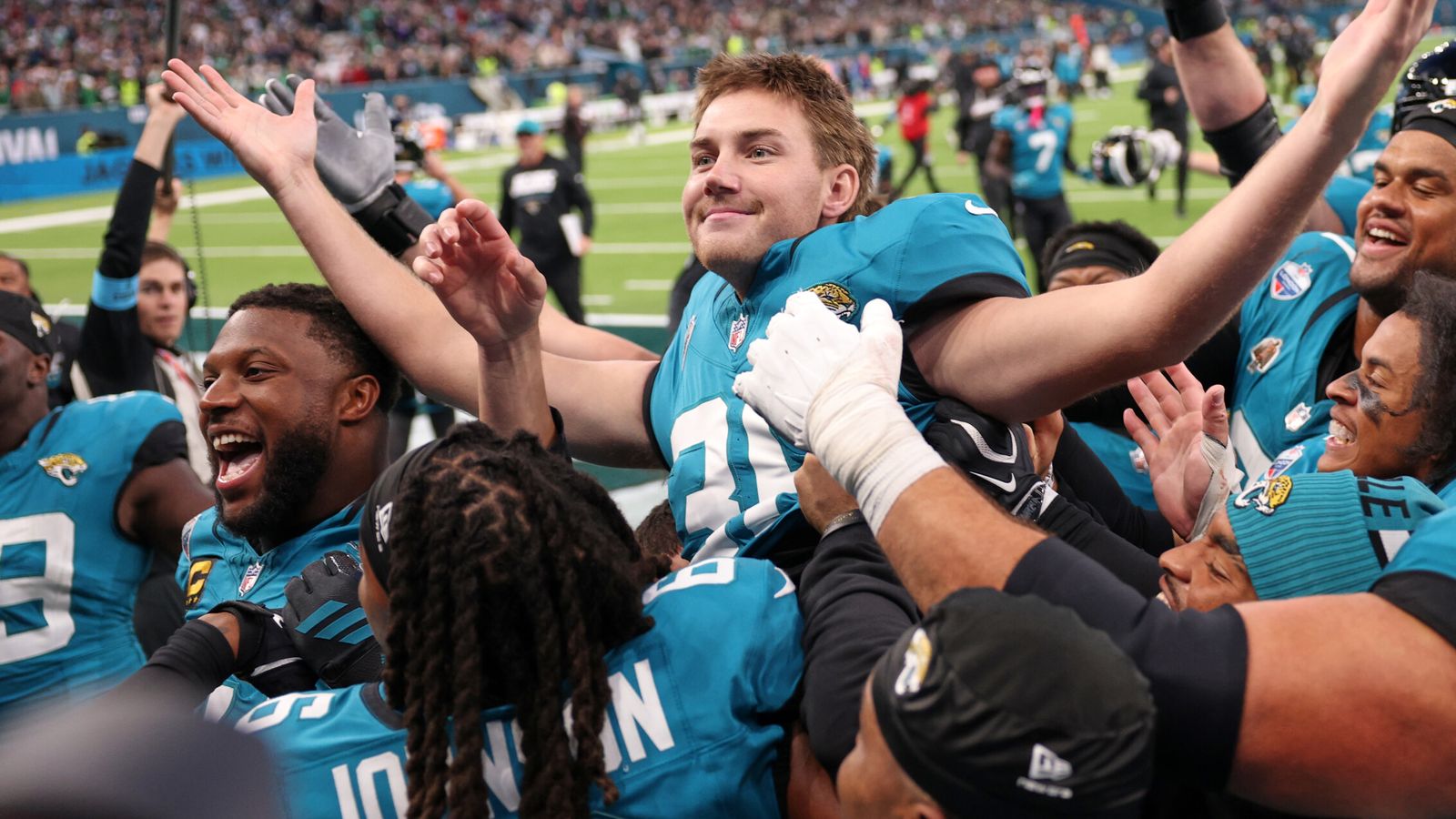 NFL in London: Cam Little kicks game-winning field goal as Jacksonville Jaguars beat Philadelphia Eagles 19-17 in Tottenham Hotspur Stadium thrillerSky Sports
 NFL cuts London ticket prices for Colts-Commanders to fill venue. Move irks fans who paid full priceYahoo Sports
 With the Jaguars on the rise, UK fans nervous about team's plan to reevaluate its London strategyYahoo Sports